
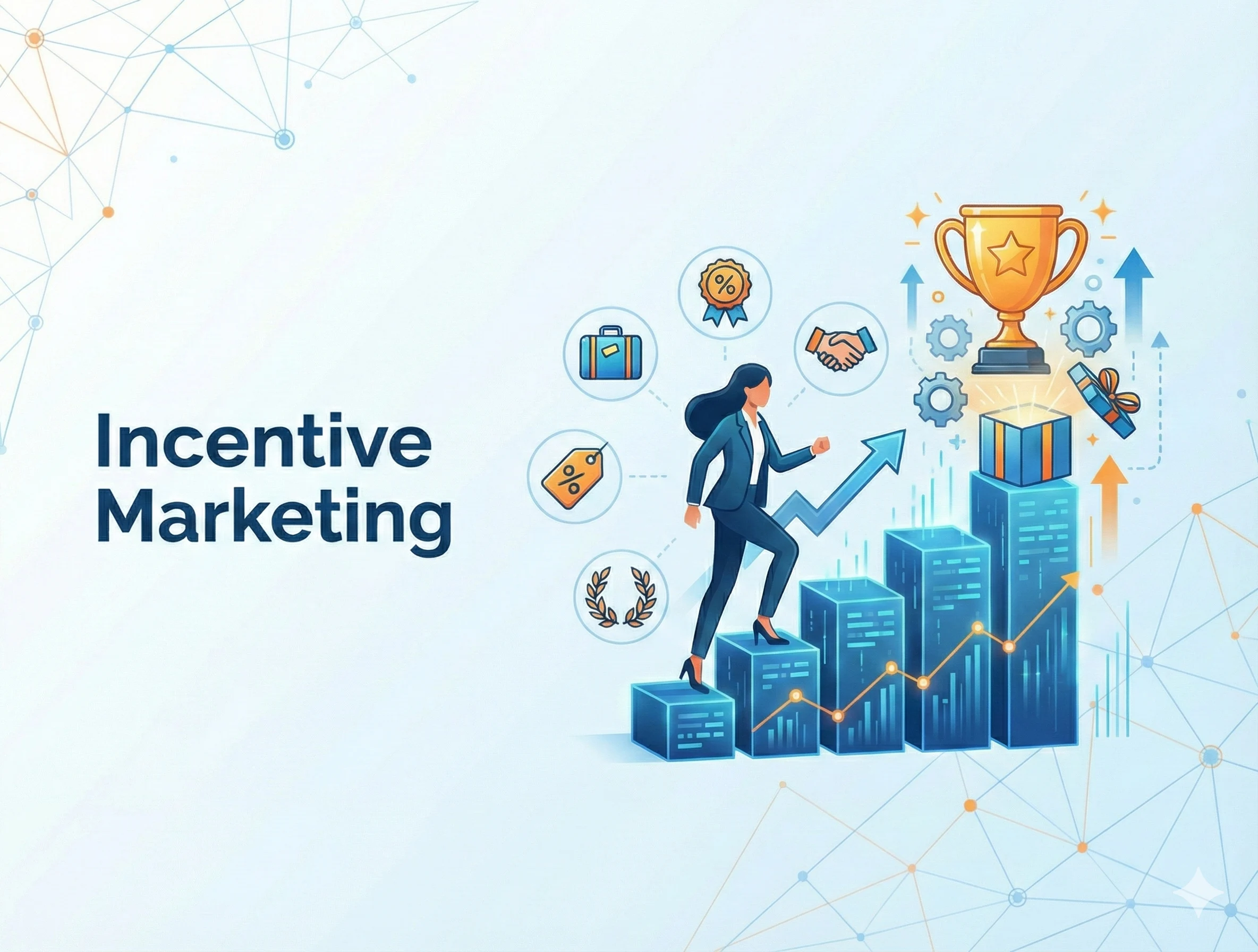
Incentive marketing
The art of motivating to build loyalty
Incentive marketing: to begin with, incentive programs organize and run challenges with rewards. Maximizing customer engagement day to day is vital for a company’s growth. Incentive (or “motivation”) refers to actions designed to drive purchases by motivating customers.
Incentive marketing is also a major loyalty driver, all the more so when customers take the initiative. Gifts reward their involvement and/or their results.
Incentive platforms therefore offer customer gift solutions in different formats:
- Customer engagement campaigns
- Customer loyalty programs
- New customer referrals
- Contests and giveaways
Customer rewards (gift vouchers, gift cards, etc.)
Why is incentive marketing effective?

Incentive marketing relies on a psychological bias: the chance to win a reward stimulates participants’ engagement and motivation. There is a challenge to take on.
Winning a reward puts consumers in a state of joy and excitement, even if its value is low. This process releases dopamine, the happiness hormone, in the brain. We all enjoy situations that bring us joy and tend to seek them out. That is why we are often motivated to take part in an incentive campaign launched by a brand.
Why adopt incentive marketing?
Incentive marketing has three main benefits.
- Customer acquisition: 69% of consumers are willing to try a brand and discover its world if they are offered a reward.
- Stronger brand awareness: an incentive campaign encourages interaction and sharing, leading to better visibility and even virality.
- Loyalty and engagement: by targeting existing customers, incentives keep interest in the brand alive, a lever that is all the more effective since 60% of consumers respond to it.
A strategic approach to attract, engage and retain customers for the long term.
Examples of incentive marketing
Danone implemented an incentive marketing strategy, a technique that uses rewards to influence consumer behavior. Danone launched a contest with a “golden glass” as the prize, adding a gamification element to spark collective enthusiasm. The initiative revived consumer interest, created a viral effect and led to a significant rise in sales, proving that emotional and financial stimulation can reverse a negative trend for a brand.
Contests are the most common example of incentive marketing. They serve awareness, acquisition and loyalty goals. For example, McDonald’s Monopoly promotion strengthens Monopoly’s brand awareness while helping McDonald’s acquire and retain customers.

Other examples:
- Gift cards: offering a brand gift card encourages potential or existing customers to buy on the brand’s website.
- Free samples: used to attract new customers, provided the trial is convincing.
- Free delivery: it removes barriers and encourages a first purchase.
- BOGO (Buy One Get One): offering a product or gift card with the first purchase helps acquire new customers while securing a second purchase.
- Loyalty programs: points-based loyalty programs strengthen the brand community and drive repeat purchases, as long as the rewards are relevant and valuable, like the gift cards Starbucks uses so well.
- Retention gifts: incentive marketing can increase customer retention by 5%, with a 25% rise in revenue.
- Rewards for specific actions: rewarding actions such as reviews or newsletter sign-ups is a good strategy to acquire new users.
- Gift cards for inactive customers: an email campaign with a gift card can reactivate customers who have not bought in a while.
- Gift cards to drive store traffic: offering a gift card during a quiet period can increase footfall in stores.