

Digital transformation as a driver of value creation
Digital transformation as a driver of value creation: long seen as a simple technology upgrade or a passing trend, digital transformation has become the major strategic imperative of the 21st century. Today, it is no longer just about “going digital”, but about fundamentally rethinking how an organization operates and delivers value to its customers.
For business leaders and decision-makers, the goal is clear: put digital to work for growth, profitability and competitive advantage. But how do you move from theory to concrete value creation?
1. From operational efficiency to profitability
The first layer of value brought by business digitalization often lies in optimizing internal processes. Automating repetitive tasks, going paperless and integrating systems (ERP, CRM) drastically reduce operating costs and human errors.
However, real profitability comes not only from cutting costs, but from the agility gained. A digitalized company can react faster to market fluctuations, adjust its supply chain in real time and shorten its time-to-market. This is where technology turns directly into operating margin.
2. Customer experience: the engine of growth
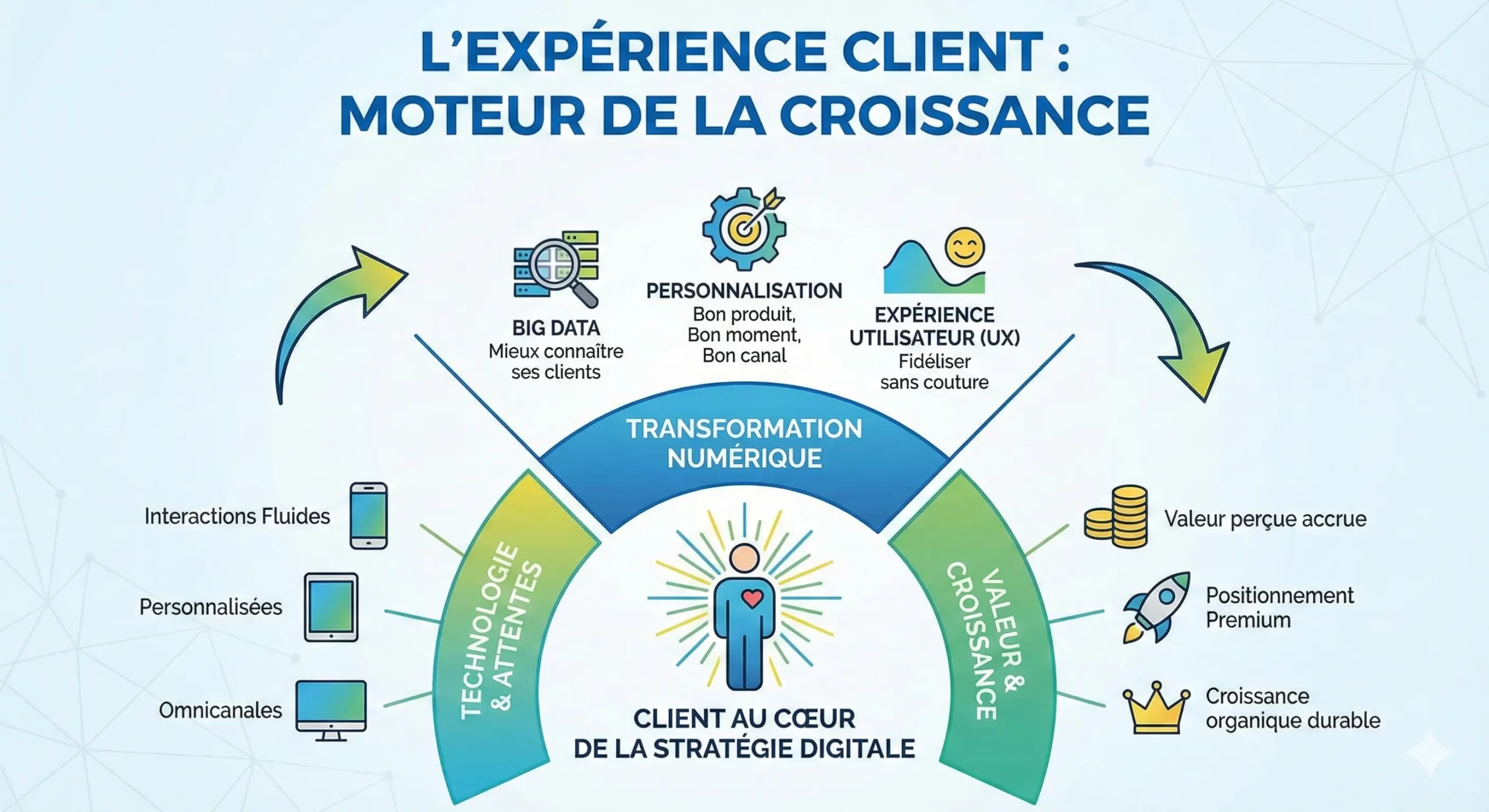
At the heart of every successful digital strategy is the customer. Technology has transformed consumer expectations: people now demand smooth, personalized, omnichannel interactions.
Digital transformation makes it possible to:
- Know your customers better through data collection and analysis (Big Data).
- Personalize your offer by proposing the right product, at the right time, on the right channel.
- Build loyalty through a seamless user experience (UX).
By putting customers at the center of the digital equation, companies do more than sell more; they create perceived value, which justifies premium positioning and supports lasting organic growth.
3. Digital innovation as a competitive advantage
In a hyper-competitive environment, the status quo means decline. Digital innovation (artificial intelligence, the Internet of Things, blockchain) gives companies unprecedented opportunities to invent new business models.
Moving from selling a product to selling a service or a use (the subscription economy) is a typical example of a pivot made possible by digital. Companies that use these levers to stand out are not just trying to be better than their competitors; they aim to be unique. That is the key to a lasting competitive advantage.
4. The human factor: the key to success
This is the paradox of digital transformation: its success depends less on technology than on people. Deploying the best tools on the market is pointless if teams do not adopt them.
Change management is therefore the cornerstone of the process. It involves:
- Transparent communication about the vision and expected benefits.
- Ongoing training to upskill employees.
- A company culture that evolves toward more collaboration and agility.
A successful digital transformation is one that aligns the power of digital tools with the intelligence and creativity of teams.
Conclusion
Digital transformation is not an end in itself, but a powerful means. When it is driven by a clear vision, it becomes the main engine of value creation for the modern company. By combining operational efficiency, an enhanced customer experience and continuous innovation, organizations can not only survive but thrive in the digital economy.
Digital is ready. Are you ready to use it to turn your potential into real value?
1 Comment
Customer service automation - SG2I
November 13, 2026[…] understand the scale of these changes, it helps to look at how digital transformation is reshaping modern business […]